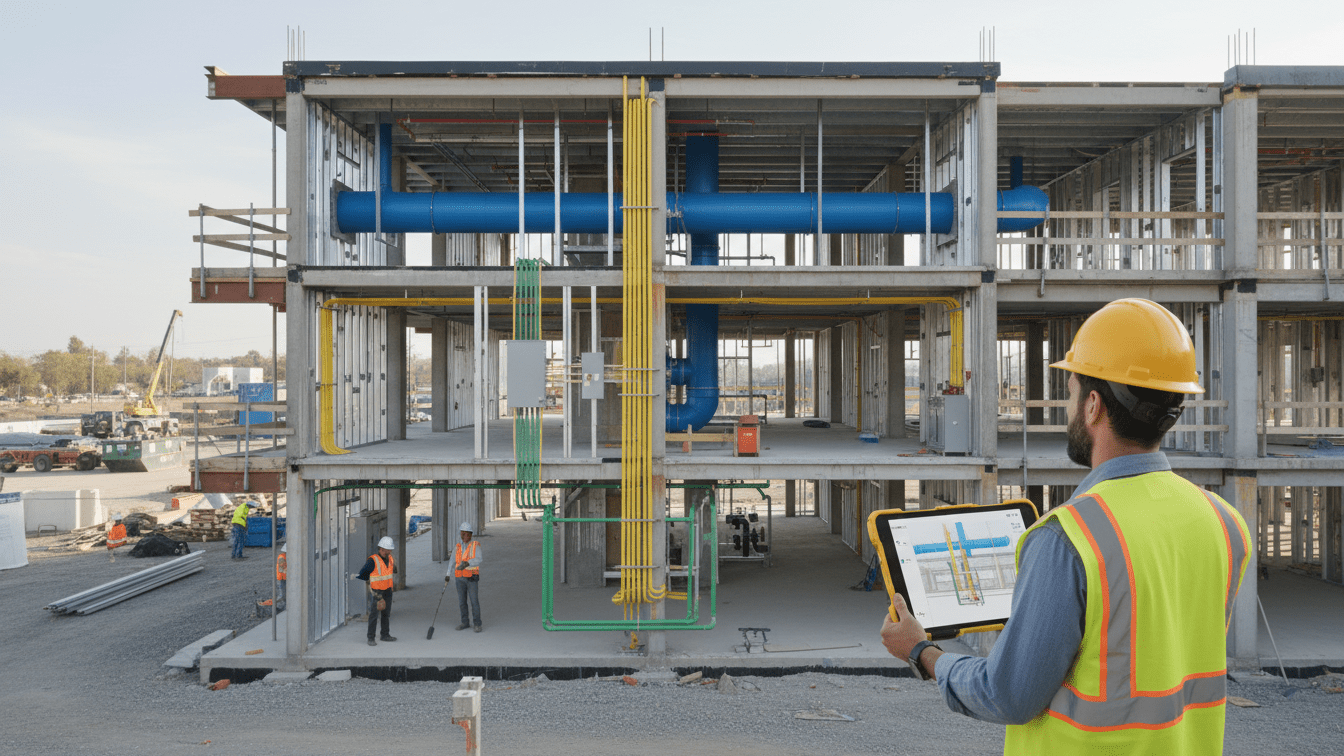
How construction managers can keep budgets stable, schedules intact, and projects on track.
When you walk into any building whether it’s a school, hospital, lab, or office, MEP systems are the invisible network making it functional. Mechanical, electrical, and plumbing systems heat the spaces, move air, provide power, and ensure water and safety systems run the way they should. With stricter codes and rising expectations around performance, these systems now shape both project outcomes and long-term operating costs.
Key Takeaways:
- MEP systems drive cost, schedule, and building performance. They represent up to 40% of project budgets and are a major source of rework when coordination fails.
- Early integration is non-negotiable. Aligning mechanical, electrical, and plumbing designs early prevents clashes and compresses schedules.
- Procurement affects the critical path. Long-lead electrical gear—especially switchgear and generators—can shift project timelines if not proactively managed.
- BIM is a tool, not a guarantee. Effective coordination requires consistent routines, accountability, and early clash resolution.
- Small design decisions influence decades of cost. Right-sizing HVAC, planning service access, and choosing routing strategies impact long-term operations.
- Construction managers play a strategic role. Their leadership ensures systems remain aligned with cost, safety, and performance objectives across the project lifecycle.
Table of Contents
Why MEP Often Determines Project Success
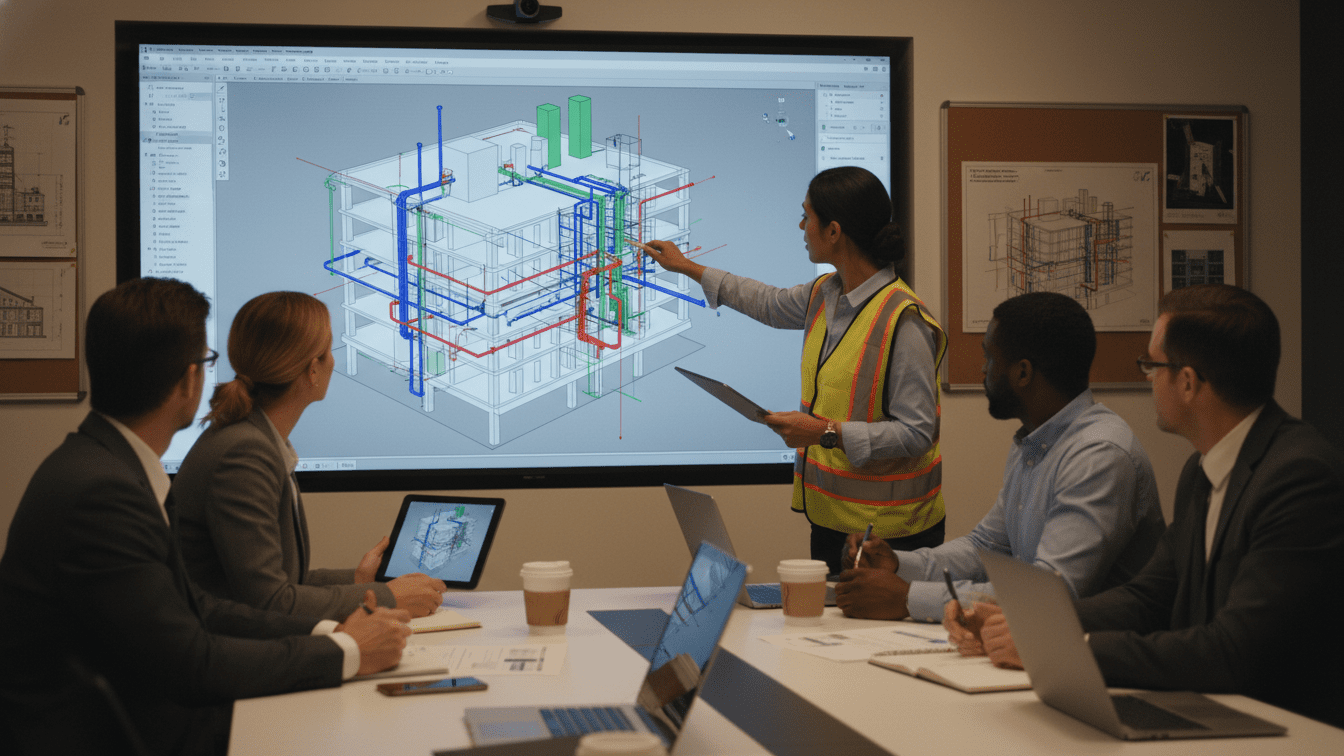
MEP issues are one of the most common causes of project delays and budget overruns. These systems run through almost every part of a building, depend on early design decisions, and require coordination across multiple trades. When something doesn’t align, like a duct that won’t fit or electrical gear arriving late, the schedule and budget feel the impact immediately.
What Mechanical, Electrical, and Plumbing Actually Cover
- Mechanical (HVAC): Chillers, boilers, AHUs, ductwork, and hydronic piping that drive energy use and indoor comfort.
- Electrical: Switchgear, transformers, lighting, IT networks, and life-safety systems. Long lead times make procurement a critical-path activity.
- Plumbing: Water supply, drainage, medical gases, and fire protection systems, plus efficiency strategies like greywater reuse.
Emerging Technologies
Modern MEP systems are evolving rapidly with DOAS units, IoT-enabled controls, high-efficiency filtration, and electrification strategies that reduce carbon and energy use.
Why MEP Decisions Impact Budgets and Lifecycles
MEP systems account for a significant portion of both initial construction cost and long-term operating expenses. Oversized or poorly coordinated equipment leads to higher energy costs, maintenance issues, and shorter system life. Lifecycle-driven decisions create efficiency and savings over time.
Codes and Standards Influencing MEP
Key standards include NEC (NFPA 70), IMC, IPC, NFPA 13/72, ASHRAE 90.1, ASHRAE 62.1, and IECC. Requirements can vary significantly across states, especially in places with strict energy codes or resilience mandates.
Changes Coming in 2026
Transitions to low-GWP refrigerants, increased electrification policies, carbon-accounting standards, and regional resilience requirements are reshaping MEP design nationwide.
Where MEP Projects Go Wrong
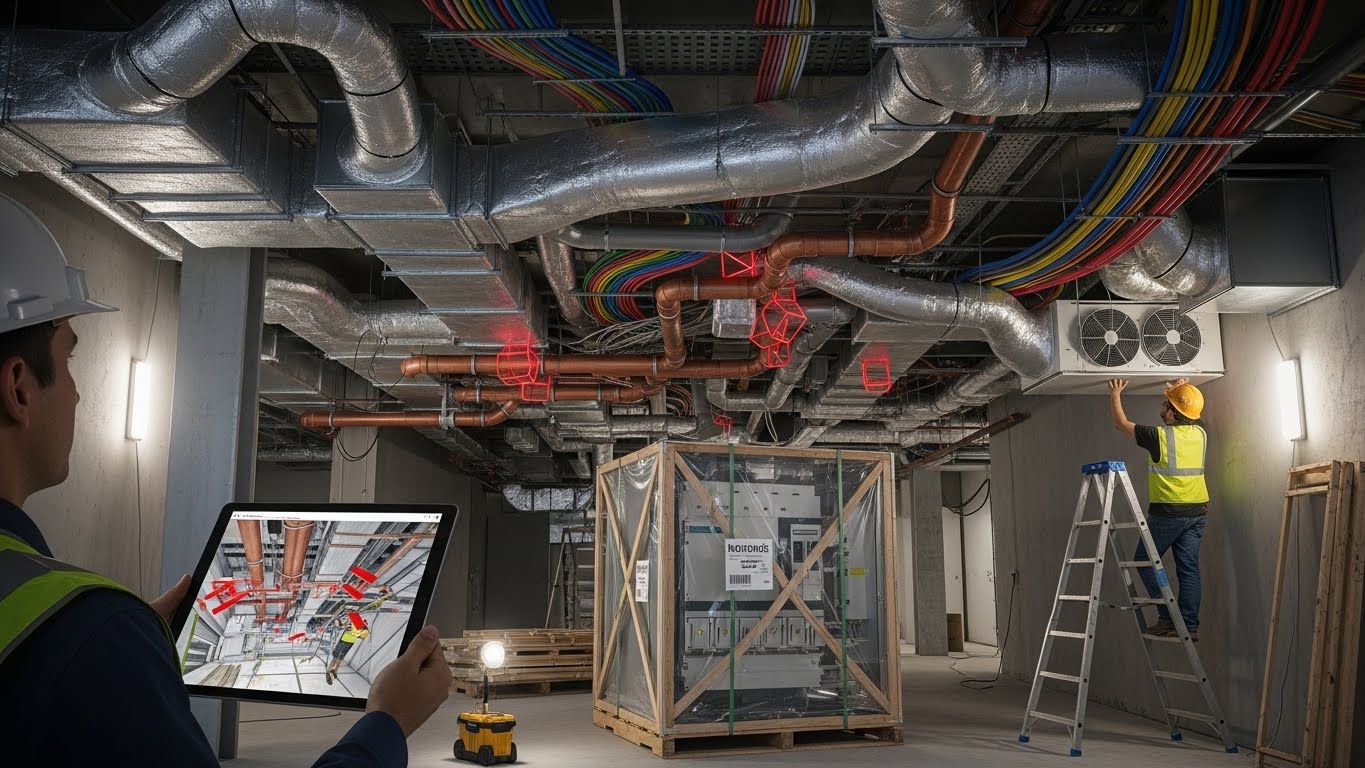
Common issues include rushed BIM coordination, late procurement, unvetted design changes, and lack of maintainability planning. Proactive alignment between trades, designers, and procurement prevents many of these challenges.
How Construction Managers Can Strengthen MEP Coordination
- Establish clear Owner’s Project Requirements (OPR)
- Track procurement as a schedule-critical task
- Approach BIM coordination intentionally, not as an afterthought
- Integrate commissioning planning early
The Bottom Line
MEP systems drive project predictability, energy use, code compliance, and long-term operational performance. When managed well, they streamline construction and produce resilient, efficient buildings. Acuity’s Program & Construction Management teams bring structure and expertise to this high-risk project area, from planning through commissioning and turnover.